


























NLC Orders TEWU-GH to End Strike Over University Council Dispute
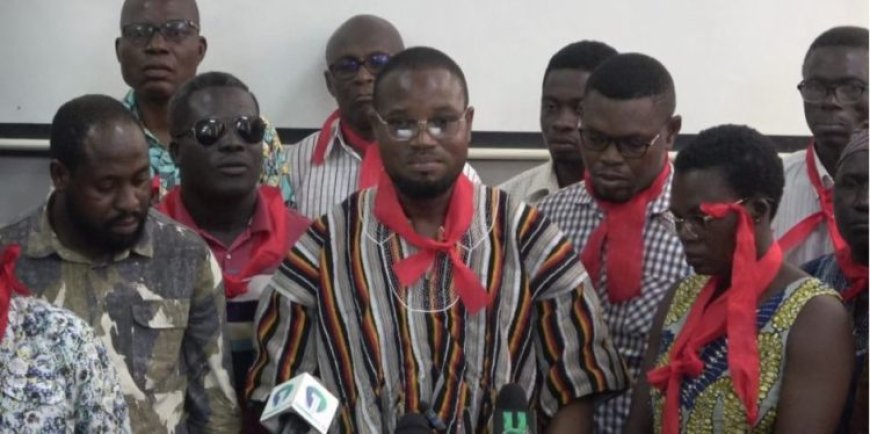


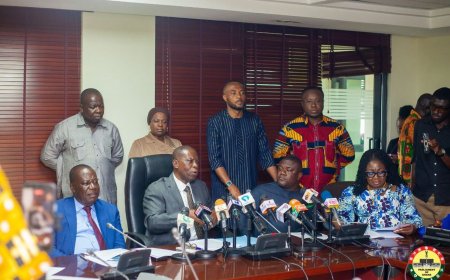
Accra, Ghana - 11 July, 2025 - Ghana’s National Labour Commission (NLC) has declared a strike by the Tertiary Education Workers Union of Ghana (TEWU-GH) illegal, ordering its members to resume work immediately or face sanctions, in a bid to restore order at public universities.
The directive, issued on July 10, 2025, follows a contentious dispute over union representation on university governing councils, which prompted TEWU-GH to launch an indefinite strike on July 3. The ruling underscores ongoing tensions in Ghana’s tertiary education sector, where labour disputes have disrupted academic activities in recent years.
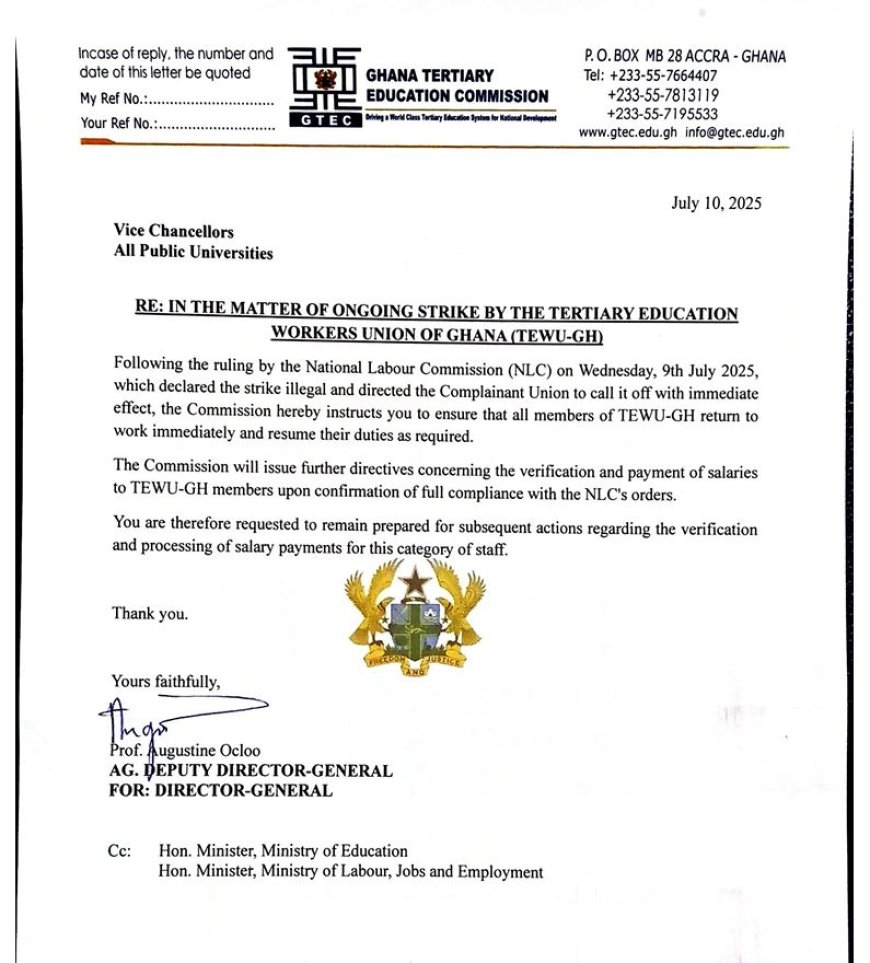
The NLC’s decision, announced after a hearing on July 9, cited TEWU-GH’s failure to exhaust legal procedures under the Labour Act, 2003 (Act 651) before initiating the strike. The commission described the action as an “unauthorised withdrawal of services” and urged all members to return to their posts immediately. It warned that further sanctions could follow if the union does not comply, while promising to address salary verification and payment issues once normalcy is restored.
The NLC’s statement emphasized its role in maintaining industrial harmony, calling on all parties to engage in dialogue to resolve outstanding grievances.The strike stems from a dispute over union representation on the governing councils of public traditional universities. TEWU-GH, claiming majority membership among non-teaching staff, issued a seven-day ultimatum on June 24, demanding the reversal of a directive from the Ghana Tertiary Education Commission (GTEC).
GTEC’s June 18 letter instructed universities to recognize representatives from the Teachers and Educational Workers’ Union of the Trades Union Congress (TEWU-TUC) instead, citing TEWU-TUC’s possession of the Collective Bargaining Certificate under Section 99 of the Labour Act. TEWU-GH condemned the decision as undemocratic, arguing it sidelined the majority union and violated workers’ rights.
TEWU-TUC, in response, branded the strike “unlawful and destructive,” accusing TEWU-GH of being a splinter group seeking relevance through disorder.
General Secretary King James Azortibah, in a July 6 statement, urged members to disregard the strike and continue duties, citing GTEC’s directive and the Fair Wages and Salaries Commission’s August 2023 confirmation of TEWU-TUC’s bargaining rights.
The dispute has highlighted a rift between the two unions, with TEWU-GH insisting on a transparent process to verify majority representation, a demand echoed in its call for support from other labour groups and civil society.
The strike has already disrupted university operations, with the University of Ghana postponing the start of its 2024/2025 academic year on September 25, 2024, due to related labour actions by TEWU-GH, the Senior Staff Association of Universities of Ghana (SSA-UoG), and other unions. These groups have cited unresolved issues, including unpaid vehicle maintenance allowances and Tier 2 pension contributions, as triggers for industrial action.
A similar strike by TEWU-GH in February 2024 was suspended after NLC-mediated talks, but recurring disputes suggest deeper systemic challenges in Ghana’s tertiary education labour framework.The NLC’s ruling aligns with its mandate to resolve labour disputes and prevent disruptions, as outlined in the Labour Act.
In recent years, the commission has intervened in similar conflicts, including a 2022 teachers’ strike over cost-of-living allowances and a 2024 anti-galamsey strike suspended after government concessions.
However, the NLC’s authority has faced scrutiny, with unions like the Ghana Association of University Administrators (GAUA) accusing it of delays in addressing grievances, as seen in a June 2025 ultimatum over salary disparities.
What's Your Reaction?