

























Bank of Ghana Should Allow More Exchange Rate Flexibility and Reduce Forex Interventions - IMF
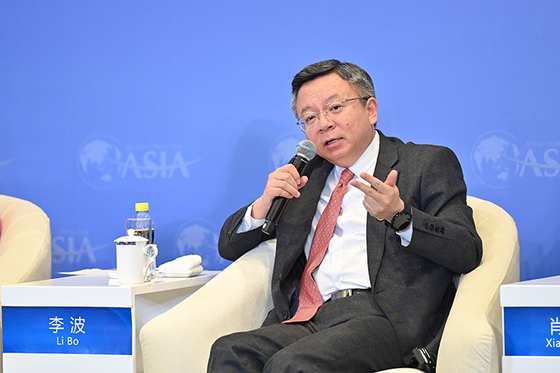

Accra, Ghana - 10 July, 2025 - The International Monetary Fund’s Deputy Managing Director Bo Li has called on Ghana’s central bank to reduce its interventions in the foreign exchange market and adopt a formal policy framework to enhance transparency, following the IMF’s approval of a $367 million disbursement on July 7, 2025, as part of Ghana’s ongoing $3 billion Extended Credit Facility programme.
The statement, made after the fourth review of the programme, has sparked debate in Ghana, where the cedi’s recent appreciation has been a cornerstone of economic stabilization efforts amidst a challenging fiscal landscape.
Bo Li’s remarks came as the IMF Executive Board completed its fourth review of Ghana’s 36-month Extended Credit Facility, which began in May 2023 to address fiscal vulnerabilities following a severe economic crisis in 2022. The approval unlocks a $367 million tranche, bringing total disbursements to $2.3 billion, bolstering Ghana’s foreign exchange reserves, which reached $10.6 billion by April 2025, equivalent to 4.7 months of import cover.
The cedi, which traded at 14.7 against the US dollar at the start of 2025, has appreciated to 10.39 by July, a 40% gain, driven by strong gold exports, rising remittances, and, to a lesser extent, oil revenues, according to Bloomberg. The Bank of Ghana’s interventions, including a $490 million injection in April and the Goldbod initiative mandating 20% of gold export proceeds be converted into cedis, have significantly contributed to this stability.
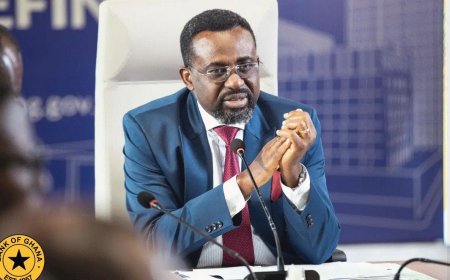
However, Bo Li emphasized that the Bank of Ghana’s frequent interventions, such as forward auctioning and liquidity management, risk depleting reserves and creating artificial stability.
He urged the central bank to “reduce its footprint in the foreign exchange market” and to “allow for greater exchange rate flexibility” advocating for a rules-based FX intervention framework to limit discretion and anchor market expectations.
This recommendation aligns with IMF concerns that excessive interventions could fuel inflation, which stood at 21.2% in April 2025, above programme targets due to election-related spending in 2024.
A detailed IMF report, expected soon, will clarify the extent of the Bank of Ghana’s market activities and the rationale for scaling back.
Ghana’s economic recovery has shown resilience, with 2024 growth revised to 4% due to robust performance in mining, agriculture, ICT, manufacturing, and construction. The debt-to-GDP ratio dropped to 55% by April 2025, three years ahead of the IMF’s 2028 target, aided by a completed Eurobond exchange and suspended external debt repayments until July 2025.
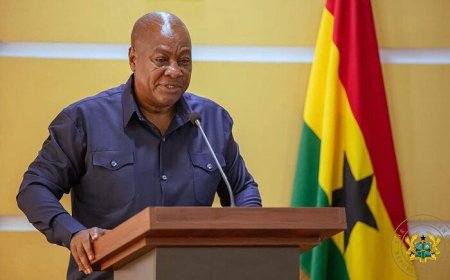
The new administration under President John Mahama, sworn in on January 7, 2025, has committed to a 1.5% GDP primary surplus in 2025 through revenue mobilization and expenditure cuts, alongside reforms to strengthen public financial management and audit 2024 payables.
The IMF praised these measures but stressed the need for sustained fiscal discipline to maintain programme momentum.
What's Your Reaction?