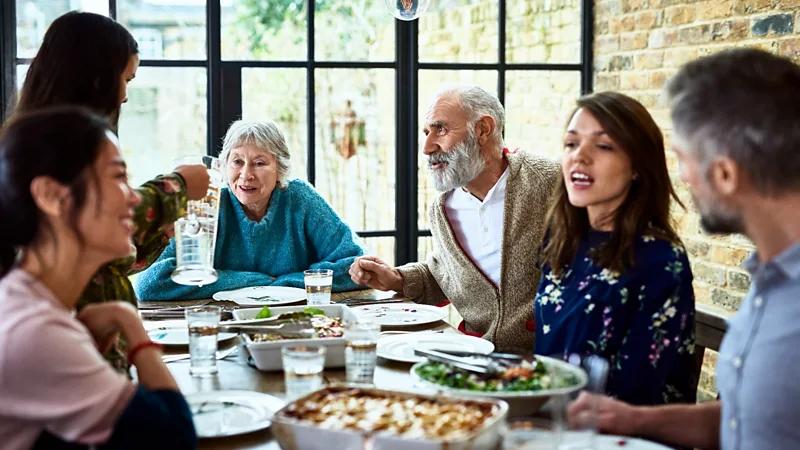










































Power of social connection in shaping eating habits



Humans are social beings, and the relationships we build with family, friends and our community play a key role in overall health.
Studies show that strong social connections make us happier, improve our well-being, and even help us live longer.
Today, easy access to fast food, large portion sizes and aggressive food marketing are common, making it hard to maintain a balanced diet.
For example, according to research, people tend to eat more when in groups than when they eat alone.
Yes, the desire to belong and be accepted is evident, even in matters of food!
Many young people are, thus, drawn to fast foods because their friends find these trendy, and school children may pressure parents for specific snack foods for the sole reason that it is what their friends and mates bring to school.
Digital social connection
While digital social connection has made it easier to share nutrition knowledge, it has also contributed to negative eating behaviours.
The convenience of online food delivery services and the distraction caused by excessive screen time often lead to mindless eating, unhealthy snacking and reduced focus on balanced meals.Many are influenced by social media food trends, which may not usually promote nutritious eating.
On the other end of the spectrum, lack of social connection e.g., living alone or experiencing loneliness can lead to irregular eating habits, less nutritious meals and lack of motivation for healthy eating, especially for older adults, causing nutritional deficiencies and health complications.
Social influence
Social influence can be leveraged to promote better nutrition.
Moreover, social media can be a highly effective platform for health influencers and nutrition experts to propagate wholesome food choices and sound nutrition among the general public.
Furthermore, food-sharing programmes, such as food banks and surplus redistribution are known to be effective in improving access to nutritious food, especially for low-income households.
Gardening initiatives, including backyard and community gardens, empower people to grow fresh produce, enhancing dietary diversity.
In Ghana, organisations like Food for All Africa and the Ministry of Food and Agriculture (MoFA), which support such efforts, are to be commended.
Authored by: Ivy Dunyo and Dr Anna Amoako-Mensah
What's Your Reaction?