

































Kay Codjoe Writes - The Gavel Fell. It Did not Bounce
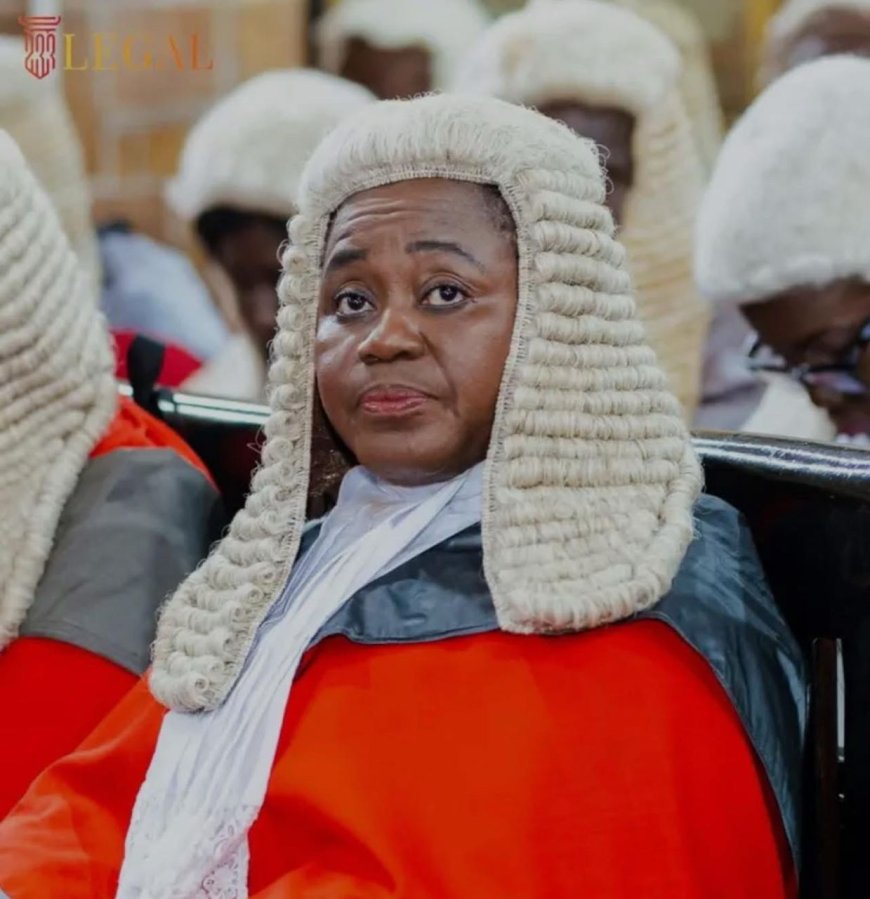


There is something unsettling about watching a judge become the judged. When those who interpret the law begin to test its boundaries for personal redemption, the Republic must decide whether justice serves people or position. Justice Gertrude Torkornoo’s return to the courtroom is not the story of a citizen seeking fairness. It feels like the story of an institution refusing to let go of itself. After leading the Judiciary and swearing to defend the Constitution, she now seeks to unmake the very process that once gave her authority.
Four lawsuits now bear her name. One to erase the Pwamang Committee that investigated her, another to cancel the Presidential Warrant that removed her, a third to stop Justice Baffoe-Bonnie’s vetting as Chief Justice, and a fourth to reclaim salaries and benefits she says are still owed. Each one tries to reopen a chapter the law has already closed.
The Constitution could not be clearer. Article 146 lays out a complete process for removing a Chief Justice: a petition, a committee of inquiry, a recommendation, and a presidential decision. Once the President acts, the process ends. That is the balance that keeps the executive, the legislature, and the judiciary from strangling one another in endless review. The law closes the door not out of pride but to keep the Republic moving. That finality is not cruelty; it is order. It prevents the state from becoming hostage to the grievances of those it has lawfully relieved of power. Due process is built into that chain, not after it.
Her new filing before the High Court attempts to stretch that chain beyond its limit. It argues that the committee’s work was unfair and unconstitutional, and that the President’s action was invalid. But the High Court cannot supervise the Presidency, and it cannot reopen a process the Constitution already decided. The Pwamang Committee was not a statutory tribunal; it was a constitutional body acting in the Republic’s name. To ask a lower court to overrule that process is to make the law doubt itself.
In defending herself, she says the questionable expenditures were approved by other officers, not by her. But leadership is not about who signed the cheque, it is about who bears the responsibility when the cheques go wrong. A Chief Justice cannot outsource accountability to subordinates. Authority is a circle; it always comes back to its source.
It is possible to understand the loneliness that follows power. To lose the authority of office is to lose a language, a rhythm, a purpose. But pain does not rewrite procedure.
Her plea for withheld benefits might stir some sympathy. It is true that entitlements earned before her removal deserve to be processed. But that claim stands apart from her attempt to undo her dismissal or halt her successor’s appointment. Suspension is not persecution, and the state does not owe a salary to anyone who has been lawfully stood down pending investigation. The robe is not a shield against consequence.
At its heart, this is no longer a legal battle, it is a moral one. The Judiciary cannot preach accountability to others and flinch when the mirror turns inward. Independence without responsibility is indulgence. A system that cannot discipline its own will eventually lose the respect of those it serves.
Ghana has seen this before, officials who confuse tenure with immortality. Every Republic dies a little when accountability is treated as betrayal.
Justice Torkornoo may feel wronged, and perhaps in private moments she believes she was treated harshly. But a nation cannot live on sentiment. The Constitution must be firm enough to bring closure, even when closure feels unfair. Ghana deserves a Judiciary that moves forward, not one that circles back to defend its past mistakes.
Let the High Court hear her case, and let it end there. No one, past or present, should have the power to hold the Republic in suspense. The gavel that once ruled now echoes back to its holder. It has fallen, and it must stay fallen.
We cannot build a just nation if the guardians of justice fear to be judged. The rule of law lives only when even its makers obey its end.
The robe can be folded with grace. The law should not have to fold with it.
Credit - Kay Codjoe
What's Your Reaction?