








































NASA to Put Nuclear Reactor on Moon by 2030
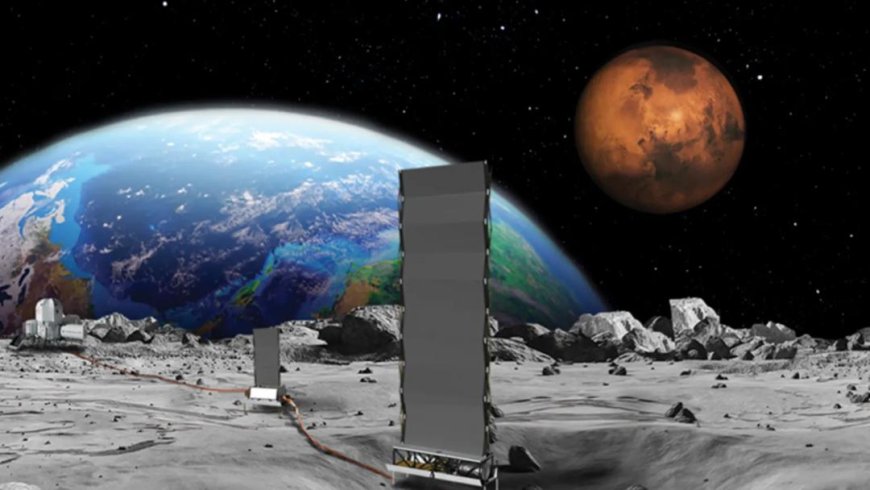


US space agency Nasa will fast-track plans to build a nuclear reactor on the Moon by 2030.The move is part of US ambitions to build a permanent base for humans to live on the lunar surface.
According to Politico, the acting head of Nasa referred to similar plans by China and Russia and said those two countries "could potentially declare a keep-out zone" on the Moon.
But questions remain about how realistic the goal and timeframe are, given recent and steep Nasa budget cuts, and some scientists are concerned that the plans are driven by geopolitical goals.
Nations including the US, China, Russia, India and Japan are rushing to explore the Moon's surface, with some planning permanent human settlements.
"To properly advance this critical technology to be able to support a future lunar economy, high power energy generation on Mars, and to strengthen our national security in space, it is imperative the agency move quickly," US transport secretary Sean Duffy, who was appointed temporary head of Nasa by President Donald Trump, wrote to Nasa, according to the New York Times.
Mr Duffy called for proposals from commercial companies to build a reactor that could generate at least 100 kilowatts of power.This is relatively small. A typical on-shore wind turbine generates 2-3 megawatts.The idea of building a nuclear reactor as a power source on the Moon is not new.
In 2022 Nasa issued three $5m contracts to companies to design a reactor.And in May this year, China and Russia announced they plan to build an automated nuclear power station on the Moon by 2035.Many scientists agree that it would be the best or perhaps only way to provide continuous power on the lunar surface.
One lunar day is equivalent to four weeks on Earth, made up of two weeks of continual sunshine and two weeks of darkness. That makes relying on solar power very challenging.
There are also some questions around safety.
"Launching radioactive material through the Earth's atmosphere brings safety concerns. You have to have a special license to do that, but it is not insurmountable," says Dr Simeon Barber, planetary science specialist at the Open University.
Mr Duffy's directive came as a surprise following recent turmoil in Nasa after Mr Trump's administration announced cuts of 24% to Nasa's budgets in 2026.
That includes cuts to a significant number of science programmes such as the Mars Sample Return that aims to return samples from the planet's surface to Earth.
Scientists are also concerned that this announcement is a politically-motivated move in the new international race to the Moon.
Source - BBC News
What's Your Reaction?