






















Kwame Nkrumah: A Leader Ahead of His Time or an Unrealistic Pragmatist?
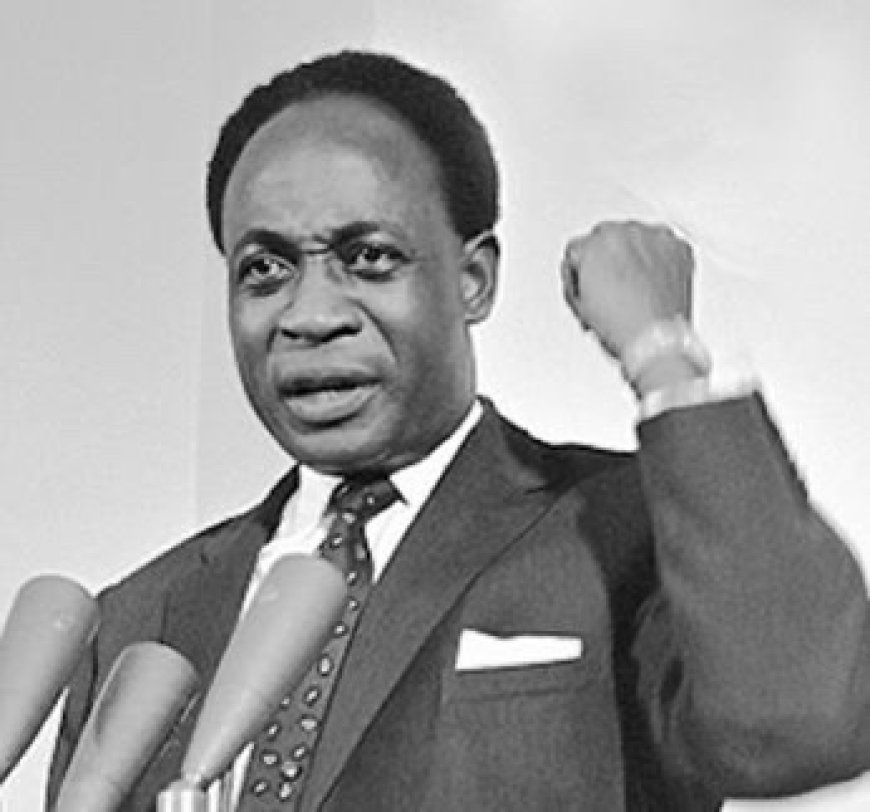

A pragmatist is a person who is guided more by practical considerations than by ideals. To be unrealistic is to expect unreasonable changes to be made within a short term or even a long term. This is the underlying principle in this article. I am critically evaluating Kwame Nkrumah’s ideology of African unity. I am discussing Nkrumah’s unrealistic pragmaticism through the lens of factors that may have influenced his sociological, philosophical and politics.
Dr. Kwame Nkrumah was undoubtedly the best African leader in the world. He stood for the unification of Africa as a unitary state with its capital located at Addis Ababa. He promoted free trade among African countries. He spoke extensively about Africa having a common currency.
Some say that he was a statesman ahead of his time in highlighting issues relating to African unity. Albeit, any investigation into Nkrumah’s ideology has been polemical for two reasons. Some see Nkrumah as doing no wrong. He was a perfect visionary. However, some see him as a dictator. While he promoted freedom, he acted contrary and foisted a one-party state on Ghanaians. He was accused of unwelcoming disagreement with his opponents.
Notwithstanding, the above polemic views, it is a fact that where Kwame Nkrumah resided influenced his thinking, perceptions and political philosophy.
I ask the following questions to assist in the treatment of events that might have contributed to Nkrumah’s greatness. Where was Dr. Kwame Nkrumah between 1939 and 1949? What were the major events happening between 1939 and 1949? Could these events have accentuated his world view on pan Africanism? How realistic were his views on African unity? Did Nkrumah play on the ignorance of majority of Africans in the 1950s? Underlying these queries is the presumption that Dr. Kwame Nkrumah was heavily influenced by events taken place in Europe immediately after the Second World War.
Nkrumah did not emerge from obscurity. He left the shores of Gold Coast to New York in October 1939. He graduated with a BA in theology at the Lincoln University in 1942. While in the US, he was involved in the Pan African movement in 1944. However, it was his aim to locate to London where trade unionism was firmly rooted. Nkrumah arrived in London in 1945 with fervent enthusiasm to lead the movement for the liberation of African countries from colonialism. While in the UK, he attended the Fifth Pan African Congress in Manchester. Among the attendants were Hastings Banda of Malawi and Jomo Kenyatta of Kenya. Theo Williams (October 26, 2020) described the Congress as a ‘landmark moment in British radical history’. The Congress demanded ‘autonomy and independence’ for Africa.
While Nkrumah was emphasizing the importance of African unity from London, the British government in the Gold Coast was paving way for more indigenous people to be on the legislative council in 1946. This one factor accelerated Ghana’s independence. Hitherto, local chiefs were members of the legislative council. However, J. B. Danquah and others called for the replacement of chiefs on the legislative council with more educated persons.
In 1947, J. B. Danquah, A. G. Grant, R. A. Awoonor Williams, Edward Akuffo Addo, Ako Adjei and others formed the United Gold Coast Convention. It is believed that Ako Adjei was instrumental in Nkrumah returning to the Gold Coast. The leaders of the UGCC recognised Nkrumah’s charisma and knowledge and appointed him as the general secretary of the UGCC. Edinam Glover (August 7, 2024) writing a column in Ghanaweb stated that ‘it was Nkrumah who stood out as the driving force behind Ghana’s push for independence.’ Albeit, Nkrumah’s connection to the UGCC made him an influential person.
Dr. Kwame Nkrumah became the first prime minister of Gold Coast in March 21, 1952. He led Ghana to independence in March 6, 1957. His famous speech which projected African unity to be paramount will be forever remembered. He linked the independence of Ghana to the total liberation of Africa.
However, Nkrumah’s philosophy and ideology were firmly developed in the US and London. That’s why it is important to consider events in Europe after the Second World War. This reference seeks to answer the question about Nkrumah’s whereabouts between 1939 and 1949. Nkrumah was in the New York and London. Let’s not forget that what is described as the Second World War was actually war between Germany and her neighbours. Germany was completely defeated on May 8, 1945. The following African countries Gambia, Nigeria, Sierra Leone and the Gold Coast were involved in the war because they were British colonies.
After the Second World War, Europe resolved to fight no more war between western European countries. So in 1951 Germany, France, Italy, the Netherlands, Belgium and Luxembourg formed the European Coal and Steel Community. The 6 nations signed the Schuman Declaration to produce coal and steel and trade among themselves as a way to reduce war between them. The idea was that as trading partners they will not fight among themselves.
In May 5, 1949, ten European countries created the Council of Europe to promote democracy and protect human rights and the rule of the law. To protect the Council of Europe they created the European Convention of Human Rights (ECHR) on September 3, 1953. Ordinary citizens could take their cases to the ECHR.
Nkrumah was in the US and the UK when the Council of Europe and ECHR were created. In March 25, 1957, the founding countries of the ECSC signed two treaties to create the European Economic Community (EEC). In short, Europe signed the Schuman Declaration in May 9, 1950; created the ECHR in 1953 and the Treaty of Rome in 1957.
Nkrumah, living in the environment of political fervour, immersed himself in the ideals of Europe, which valued liberty, industrialisation and trade. Nkrumah was aware that Europe was forging ahead with commerce to remove trade barriers. It was therefore coincidental that while Europe was talking about European unity, Kwame Nkrumah was advocating African unity.
The difference between the two is the acceleration of events. Europe moved faster because they had strong infrastructures. Africa stalled because of weak infrastructures and other practical factors.
It is strongly argued that Kwame Nkrumah was aware of the African challenge. However, he kept on positively talking and promoting the capability of the black man ruling his own affairs.
Kwame Nkrumah understood clearly that Ghana cannot grow faster than Togo or Ivory Coast. When he said that the independence of Ghana was meaningless unless it is linked to the total liberation of Africa, he was accepting that if Africa was going to be united, we must focus on education, infrastructures and trade among African countries.
The concept of economic power and the unification of Africa did not originate with Dr. Kwame Nkrumah. Nkrumah wanted Africa to follow the European Economic Community model. In a one sentence, Nkrumah’s political and intellectual influences were heavily shaped in the US and Europe. Nkrumah’s pragmatism on African unity sounded very good in the ears but was unrealistically achievable during his lifetime.
What's Your Reaction?